One of the reasons for which I am doing this project is because I want to shed some light into life in sub-saharan East Africa. It seems to me there is a lot of prejudice regarding people’s lives, what they have, what they don’t have and what they would want, which has made me want to share their true stories and experiences, as witnessed authentically through my eyes. It specifically concerns the middle class of Tanzania, Rwanda and Uganda, which are the countries I have visited so far, and so my references to ‘Africans’ predominantly include those.
I have therefore decided to collate my conversations from Tanzanians, Rwandans and Ugandans and shed light on different aspects of life to provide more information and understanding. I have selected a few topics for which I have been asked multiple times, and a few which I have been observing while being based here. Of course this is not an exhaustive list and to some extent it is a generalisation – there are all sorts of lifestyles everywhere – but these are some aspects which are predominantly stereotyped and misjudged in our otherwise informed western world.
#1 Water Supply & Provision
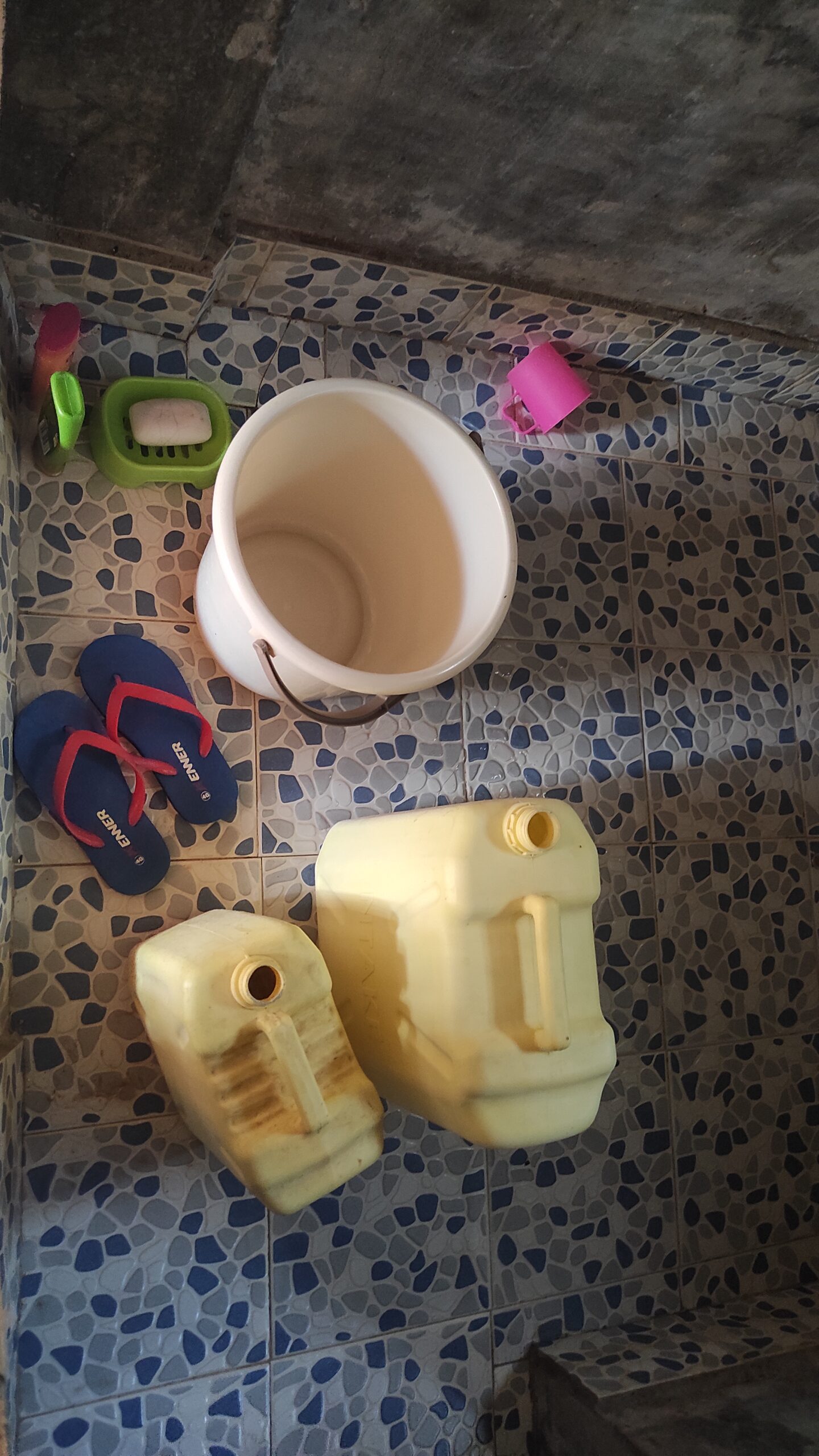
For many Africans in rural or semi-rural areas, running water is not available. Instead, many villages and neighbourhoods have boreholes, which supply water from underground. These boreholes are accompanied by a tank, which allows water storage on site, and are fitted with a tap to allow people to fill up the jerry cans used for transporting water.
A daily part of life, fetching water in 10 or 20lt plastic jerry cans is conducted by pretty much everyone from the age of 4-5 and upwards. The younger ones are sometimes seen carrying the 5lt water containers, with one hand extended out for balancing themselves against the weight. Carrying water is an art in itself, the weight itself might not be that big, but when carried on the side of the body using one hand, pretty quickly it gets very tiring! I was embarrassed by the amount of times that some 12 year old boy saw me struggling with my 20lt jerry can and carried it for me all the way to my room…

Of course there are rural areas with supply infrastructures through which people have access to water directly in their houses, but for a large number of people fetching water from the nearest borehole is a part of life. This means that, while a Westerner might look at young kids carrying jerry cans and feel sympathy for them, they don’t feel particularly sorry for themselves. For many of them, this is just a part of life, and not something that you will find people complaining or moaning about.
#2 Toilet
Many toilets are squat toilets, with a bucket in order to manually flash the toilet where there is no running water. When I was in primary and secondary school in Athens, our schools had squat toilets as well, and it felt completely normal. The first time I saw usual toilets at school was when in high school, as a scholar in a private school.
Of course, this poses the question of how would someone who is disabled or unable to even partly squat down deal with it. The truth is that I haven’t yet had the opportunity to ask someone about it and understand it better, but having understood the strong community relationships in East Africa, I believe that the family or community would have devised a way to support someone who was in such need. I’m hoping to have the opportunity to understand that better, and report back on it.
#3 Shower
In those areas without running water, showers are conducted in a ‘bucket shower’ style. Water would be boiled either in a kettle or outdoors in the fire (for those households without electricity or during power cuts), and then mixed into a bucket with water from the jerrycan. The bathroom is effectively a wetroom, with an area for showering. For me, bucket showers were a very satisfying and relaxing experience. I am not sure whether it was the quietness – not having the sound of the running shower – or the act of pouring the water over me by myself, but everytime I was looking at the bucket, I got a craving for my evening bucket shower.

#4 Healthcare
This one is an issue, and one that has troubled many people, especially in Uganda where I’ve had the chance to understand the reality of hospitals quite a lot.
Last year, I was treated in Tanzania for a vile bacterial infection over the course of three days. The hospital I was in was a private one, so the care I received was excellent.
The reality I am hearing from my Ugandan friends is very different. To be paid attention to in public hospitals, most people would need to bribe, the equivalent of a few thousand pounds some times. If you are unlucky enough to arrive in the hospital on your own, without someone from your family to constantly chase the staff and demand that you are seen, things might be very hard for you. It’s not uncommon for people to pass away whilst waiting to receive treatment in hospitals, and there is often a lack of essential medication.
So yes, a higher quality of healthcare is something that many East Africans would really benefit.
Eating by hand is part of the culture and something that needs to be respected while immersed in African culture, and it is actually ( me personally) very relieving to not need to worry all the time about maintaining 100% perfect hygiene (I am sticking to brushing my teeth though!). It also makes me appreciate how being closer to nature and a life mostly spent outdoors relaxes the need for strict hygiene that often accompanies city life.
#5 External Appearance
External appearance doesn’t need to be perfect, and it’s okay to have some dirt on your clothes or your feet! I appreciate beauty and taking care of our appearance, but I feel so relaxed when the standards for external appearance are dropped to some extent! It means I don’t constantly need to be preoccupied with it, to make sure every little detail is correct. Instead, people focus on other things, things that are really important, such as food, shelter, water. It’s also important to understand that many people spend a significant part of their day working outdoors, and therefore it would be unrealistic to always stay 100% neat and tidy (and perhaps unnecessary…?)

#6 Hygiene
Hygiene can be a contested topic in sub-saharan Africa, with many differences between urban and rural environments. In urban environments, hygiene is often of an average level, with many toilets in bus stations and other public spaces being quite basic or even run down. Most of them do have a portable hand washing basin, with or without soap. In other examples, standards are very advanced, though in specific areas or neighbourhoods.
In the school I have been staying at, teachers and staff emphasize the importance of bathing each night, and all students respect that.
Among children, there is great relaxation with washing their hands before and after eating (eating among children is mostly done by hands, and specifically the right hand), and teeth brushing as well. They might rinse their hands afterwards, but that’s about it sometimes. It might seem surprising to us Westerners, but there are extremely few issues of bacterial infections or gastrointestinal issues. This is something that the kids are exposed to from Day 0, and therefore it is not something that they feel needs to change, and I understand that.
#7 Nutrition
I have personally really enjoyed the East African diet (with a few exceptions!). Nutrition is often founded on green bananas (which are being cooked and serve as a staple, similarly to potatoes in Europe), beans, soups, stews, green boiled vegetables, ugali (staple from maize), fish, chicken and beef. A delicious snack are grasshoppers (yes, certain species are edible and when fried they are actually very tasty, almost tasting like small fried fish. You just need to get used to eating them without looking too much at them!) As well as delicious grasshoppers, pineapples, mangoes, jackfruits, apples, avocados, and bananas are some of the most tasty fruit I have ever had. Passion fruit is commonly consumed as a refreshing beverage. A lot of the food can be fried and therefore hydrogenerated oils can be plenty, processed sugar is generally consumed extremely frugally, and so is alcohol.

