The first routine has finished and Sylvia, the incredible woman running St Paul Primary School, comes up to me with a suggestion.
“I would really love for you to present something with the kids on Friday”.
She knows how many times I mentioned to the girls that I would show them some dancing, and I’m grateful for the nudge to do it. Feeling nervous but thrilled at the same time, I skip the rehearsal for the next song and rush to find a slightly shady (under a 28C sun with about 90% humidity) corner to create, memorise and present a dance routine!
Dancing
One of the things I love about dancing is how it surpasses any artificial divisions created among humans. The focus is on the rhythm, the beat, the motions of the body; and no space is left for any negativity, complaining or misery. Dancing provides me with a sense of freedom that very few other things do, and I love its potential to foster strong cross-cultural connections, its ability to unite humans and create a sense of hope, freedom and self-expression.

I have the honour of being here during the last week of the term before the Christmas break. Graduation is on Friday afternoon, and I’m already feeling really excited for it. Some of the dances are incredible, these are 9-13 year old kids and are dancing with very advanced but very natural moves. I’m also surprised by their energy, which is lively throughout the day (granted I may have forgotten how it is spending a day with a 12 year old, but I do perceive a freedom, respect and vitality which I really appreciate). Having spent about 2h preparing and rehearsing the song (after all, I have never choreographed a song by myself for a group presentation, so I’m really excited for the result).

After practicing our other 3 routines, teaching the choreography of Djadja by Aya Nakamura (I was drawn to select an originally African artist) for the rest of the day was an absolute pleasure. We had some really interesting conversations about the importance of rhythm in the dancing, feeling and understanding the music, and being free to fully express yourself confidently through the dance. The importance of listening to and feeling the music, prior to any fancy or elaborate moves. Three hours in, and my girls (I tried to invite a couple of boys but didn’t have much luck…) have already memorised the routine and seem to be cherishing it. The next challenge is to remember it the following morning!

The hazy joy of dancing captured by all sorts of cameras (not everyone can afford a high quality phone…)
Washing Clothes
Having declined multiple offers from the girls to wash my clothes (I feel very guilty accepting help from 11 year olds, even though I am sure they can do it double the speed and quality of my washing too).
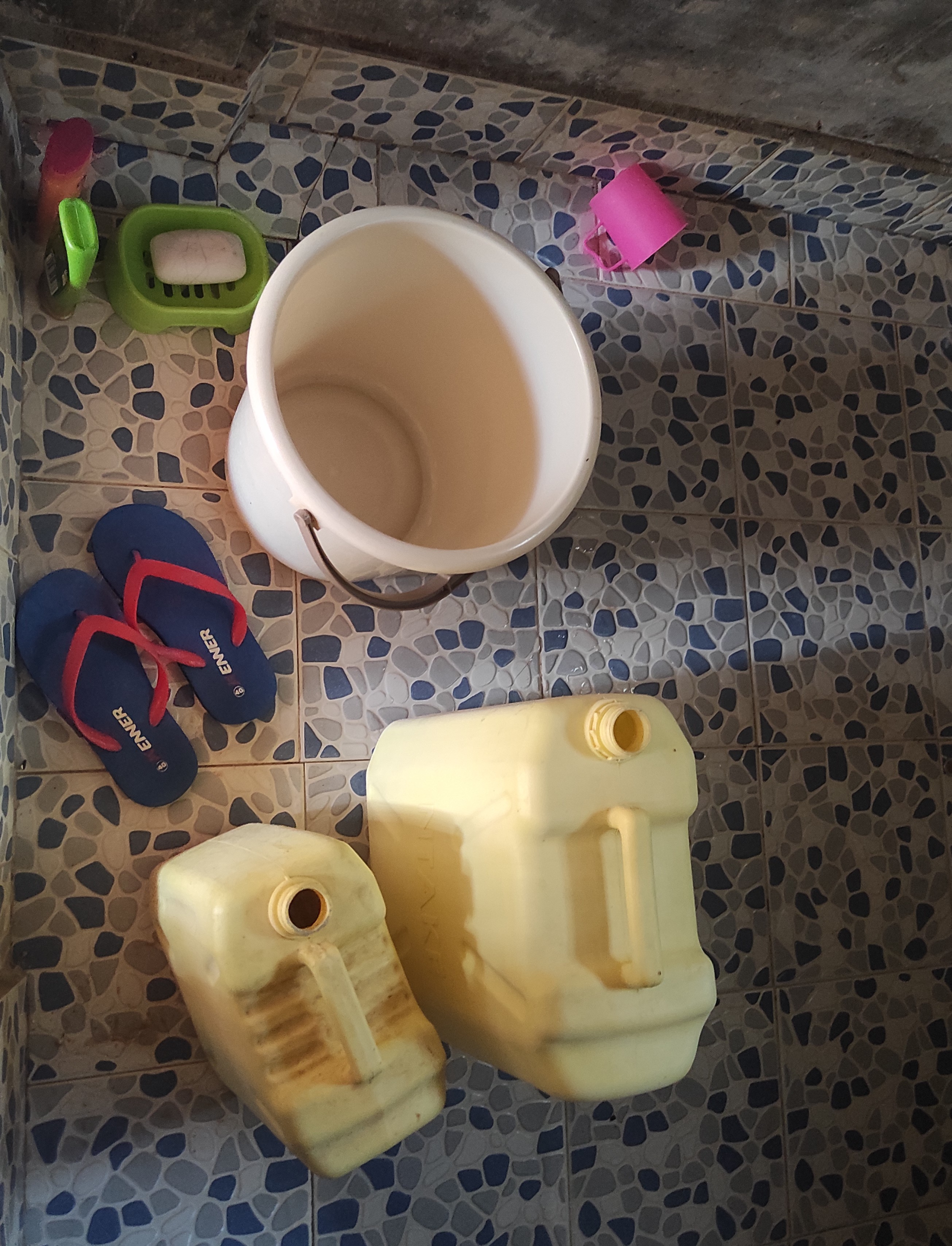
I have hand washed before in a basin, first time using my shower bucket for a nice load of clothes, most of them dusty but otherwise not particularly dirty.

It turns out handwashing is a lot harder than it looks! About 10 minutes in, my neck, lower back, arms and legs started to ache. I love to exercise and do it on a daily basis, but hand-washing was an interesting challenge. I then ran out of water in my jerrycan while rinsing and kindly asked a girl that was around to fetch me some. I have generally been impressed with how little water I have used while showering with the bucket, and in the hand-washing I had the same thought, but my lack of experience combined with the dust in all my clothes called for additional water…

Having re-rinsed some clothes, I proudly went out to hang them up, forgetting that they were not drained. Manually draining the water from clothes actually requires a lot of strength on the hands and palms, and I have to take multiple breaks to make it through my batch! In my last garment, I realise that there is still (an abundance of) soap on it, which meant I had to go back into my room (every time in an out is accompanied by a change of shoes, as African houses avoid having any shoes inside the house, so everyone tends to leave the shoes in the porch, keeping the inside clean and without dust), reload water into the bucket and rinse the last garment. After about an hour, I was done!
The Concept of Time
It gave me a weird sense of satisfaction (and a very sore neck) having washed my clothes by myself. This is very common here, it is not deemed as a chore or something that could or should be avoided in the essence of “gaining time”. Rather, it is a part of daily life. An opportunity to find yourself absorbed in a wholesome action, have the time and the space to process and think. I keep coming across the artificial idea of “gaining time”, always trying to save time to do something else later on, never being able to appreciate the thing that one is doing.

In Africa, the obsession about time does not exist, or exists at a fraction of that in our Western societies. Here, time is something that passes while you are living life, not something that needs to be dreaded, constantly preoccupied with and, ultimately, made unhappy by its passage. Time is respected, but not to the extent that it becomes damaging to someone’s mental health. Time is also malleable, and people adjust where they spend their time depending on their priorities – the first one being family, friends and neighbours.
I have been perceiving a sense of sympathy for Africa in our Western societies, which is definitely founded on issues relating to poverty, health and system functions. Having spoken to many Tanzanians, Rwandans and Ugandans, the consensus is clear that there are many changes which would significantly support people’s lives (especially around corruption, accessibility and public services) but I can’t help but feel that we should take a hard look on ourselves and the issues in our highly advanced societies, such as loneliness, isolation, and mental health problems, which -very interestingly- seem to be a lot less prevalent in Africa. People take deep care of their family, friends and community in different ways, and on many levels.

They devote time wholeheartedly and hence they know that, in time of need, there are people who will support them fully, whether financially, practically, emotionally or mentally. I am of course talking about the majority here, understanding there are always outliers and differences. But I think that this certainty that they can reach out and really lean on each other has an incredibly positive effect on their experience in life and their mental health.
For me this sparks up the question – in what ways are we probably poor in our wealthy societies, and how can we learn from other societies that we might be subconsciously, or consciously, looking down on?